
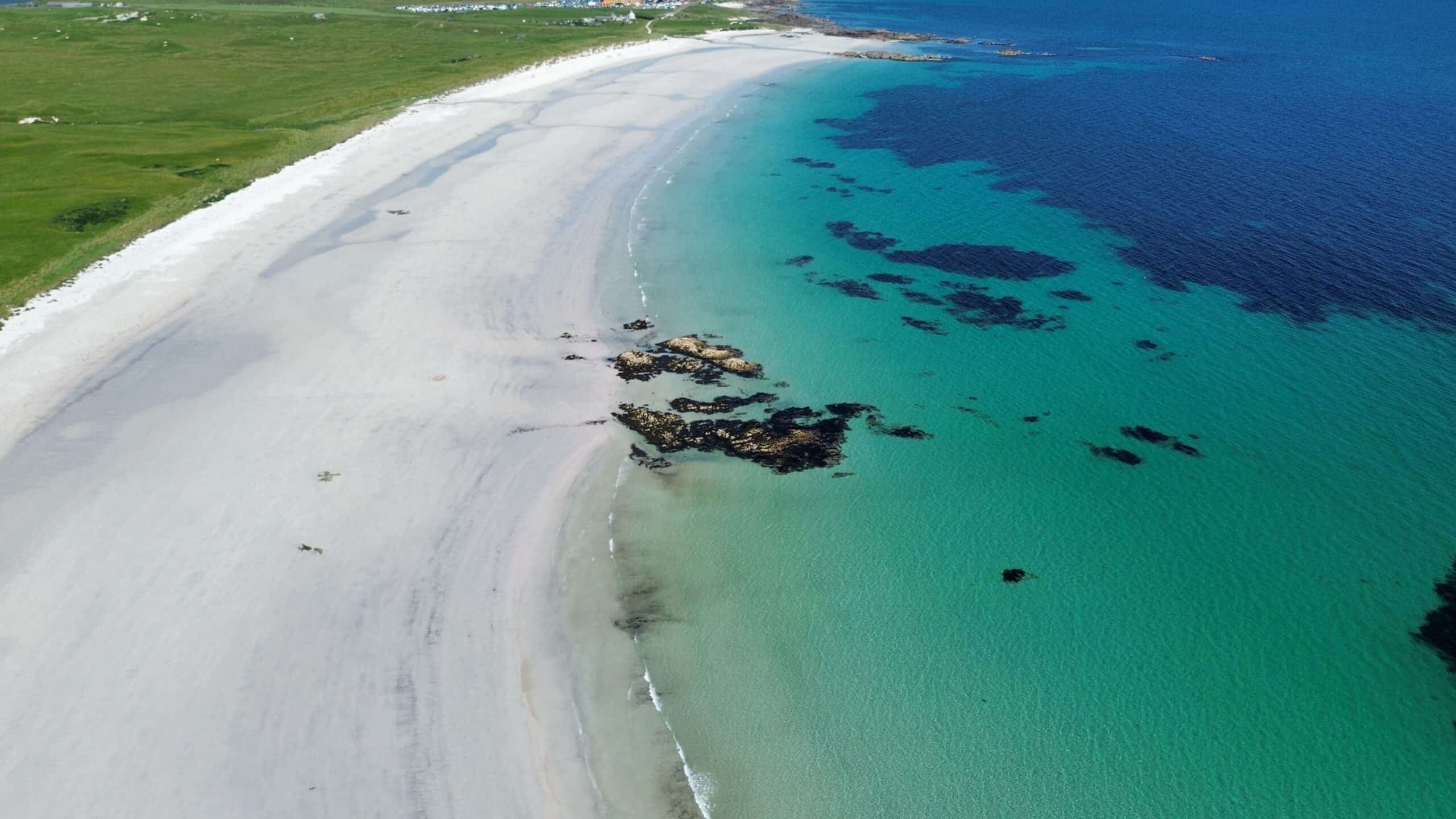
The best Scottish island to visit really depends on what you’re after. Skye and the Outer Hebrides offers up scenery that you won’t find anywhere else, Islay is a top spot for whisky lovers, Orkney and Shetland is a solid choice for history buffs. The list goes on… It’s no mystery that the Scottish Isles are packed with adventures, no matter where you choose, but let’s at least help narrow down one or two for you.
Table of Contents
Tiree
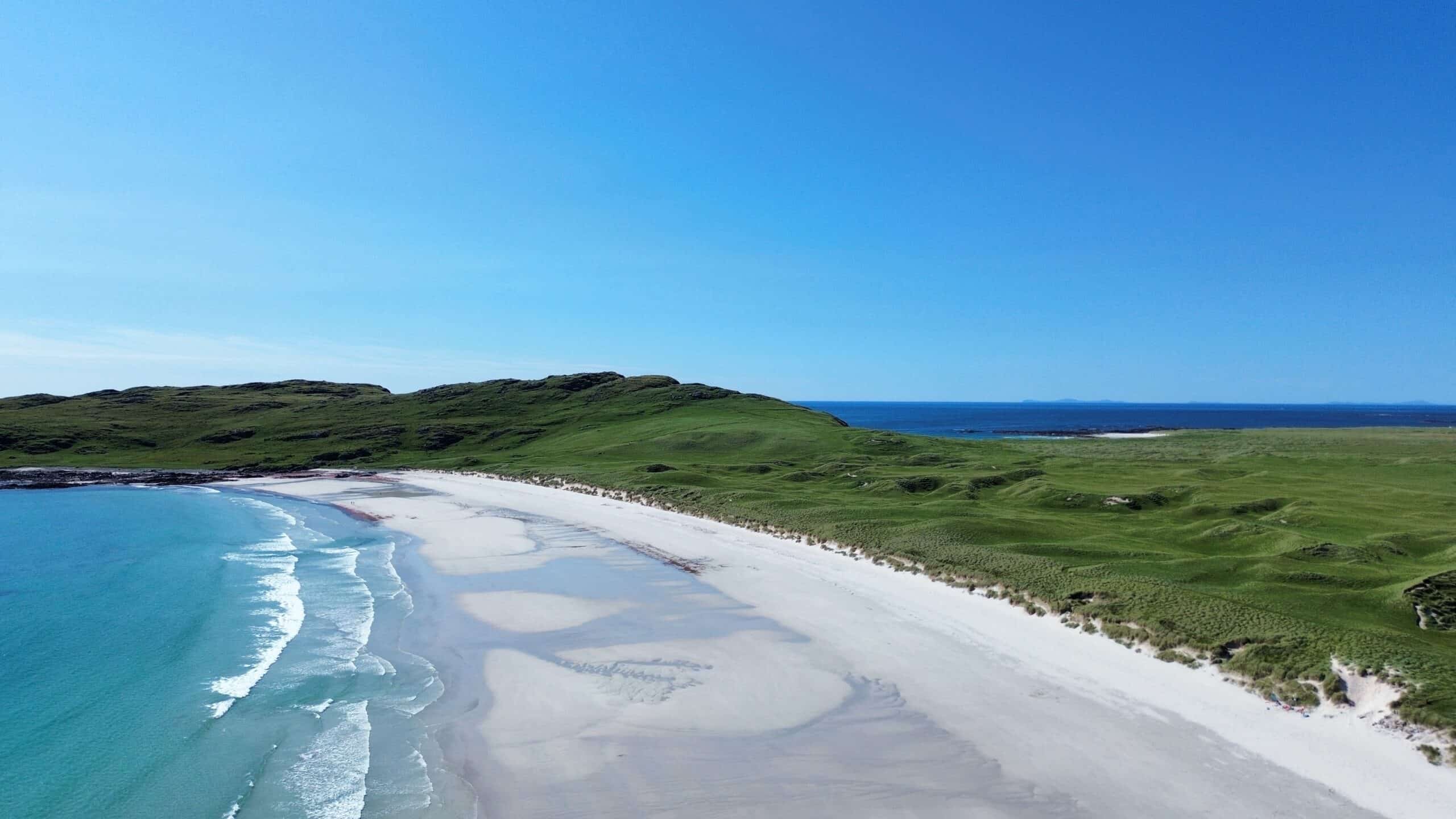
The Isle of Tiree is the furthest westerly island in the Inner Hebrides and earns its “Hawaii of the North” nickname through clean beaches, clear water and genuinely high sunshine hours. I can back that up, though I’ll take no responsibility for whatever weather you actually get.
It’s a flat, open island, ideal for cycling or coastal walks where you barely see another person – beach dependent. If you want space, silence and huge skies, Tiree delivers.
The surf and windsurf scene is strong thanks to the Atlantic swells. The Tiree Wave Classic brings in serious windsurfers each October, and the Tiree Music Festival in July turns the island into a lively hub for a weekend (highly recommend).
Accommodation is mainly small B&Bs, self-catering cottages and a couple of small hotels. Booking early is smart, especially in summer or around events. Wild camping is possible but should be done properly and sensibly.
Tip: The wind can be fierce, even in July. Tiree can be very sunny, but never still, so pack layers.
Tiree is for you if:
- You want wide-open beaches, big skies and uninterrupted quiet
- You enjoy cycling or walking on flat terrain with minimal traffic
- You’re into surfing, windsurfing or watching serious Atlantic swells
- You prefer small, low-key islands with limited but cosy accommodation
- You don’t mind wind and like the idea of a bright, weather-exposed island

Coll
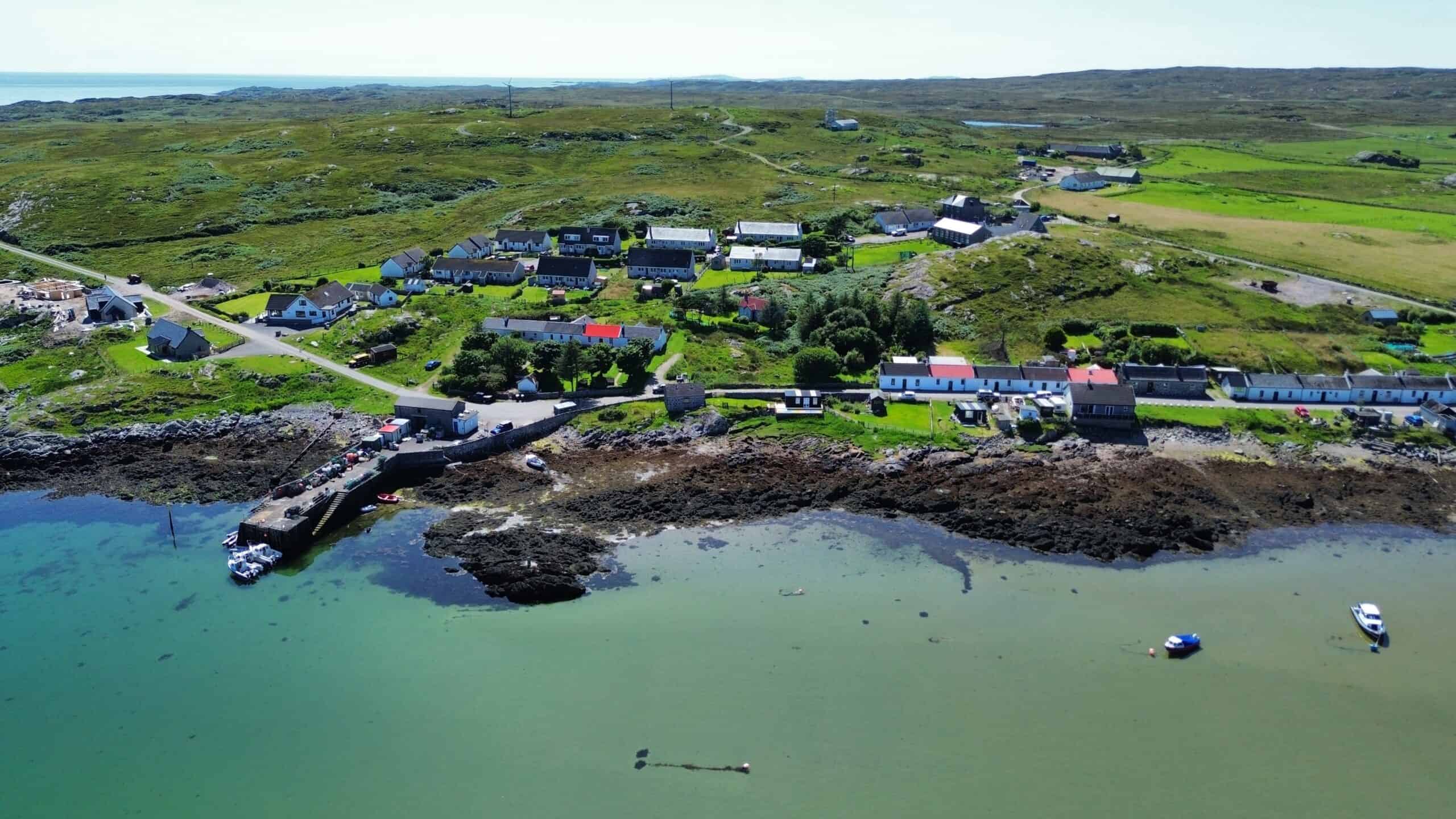
Coll is smaller, quieter and more remote than Tiree. Ferries run from Oban, and you can hop across from Tiree very easily. The island revolves around Arinagour, home to its single shop, hotel and the main pier. Everything beyond that is open moorland, beaches and a coastline that feels untouched.
Coll is a designated Dark Sky island with no streetlights. Autumn and winter stargazing is exceptional if you don’t mind the cold. Walks to Feall Bay and Crossapol are worth the effort. You often have entire beaches to yourself, especially outside July and August.
Time slows down here. If you want a proper mental reset, Coll does exactly that.
Coll is for you if:
- You want real quiet, not just weekend quiet
- You enjoy stargazing under proper Dark Sky conditions
- You want raw, uncrowded beaches
- You’re after a digital detox with near-zero infrastructure
- You like niche islands that haven’t been polished for tourism
Mull
Mull is one of the easiest islands to reach, with regular ferries from Oban to Craignure (about 50 minutes). Quieter alternatives from Lochaline to Fishnish or Kilchoan to Tobermory give options if you’re avoiding traffic.
Tobermory is the colourful capital, full of seafood spots, small shops and familiar Balamory views. Mull has strong wildlife opportunities, with plenty of boat trips to see puffins and whales. It’s also the main jumping-off point for Iona and Staffa, which makes it a flexible base for wider exploring.
Mull is perfect for a short, structured trip because travel times aren’t as slow as other islands. The roads are still rural, but not as single track heavy as other Scottish islands.
Mull is for you if:
- You want variety without feeling too remote
- You’re travelling with family and want easy logistics
- You’re into wildlife and boat trips
- You want quick access to Iona and Staffa
- You want a scenic island that works well for 3 to 5 days
Islay
On Islay, the air smells of salt and single malt. The island has nine distilleries, including Laphroaig, Ardbeg and Bowmore. Distillery tours are essential, even for casual whisky drinkers. The walk between Port Ellen and the southern distilleries is a genuine highlight, and you can easily visit three on foot in a single day.
Food is a big part of the experience. Fresh seafood, local meat and bakery stops are everywhere. It’s pricier than some islands once you factor in food, tastings and accommodation, but you get the return.
The west coast has long, quiet sands like Machir Bay, one of the island’s best beaches. Ferries run from Kennacraig to Port Ellen or Port Askaig, and there are flights from Glasgow. A car is useful, as public transport follows school timetables, which can slow your plans down.
Tip: Distillery tours often sell out days ahead. Book your slots before you arrive, especially at Laphroaig and Ardbeg.
Islay is for you if:
- You love whisky and want to visit world-famous names
- You want to visit the round church and learn why it’s round
- You like slow travel with a food and culture focus
- You’re happy budgeting a bit more for the experience
Barra
Barra is the southern entry point to the Outer Hebrides and home to the world’s only airport where scheduled flights land directly on a tidal beach. Flying in from Glasgow to Traigh Mhòr is a bucket-list moment if the tide lines up.
The island is small and easily explored by the circular road. Cycling the loop is a popular way to see everything at a steady pace. For views, walk up Heaval to the statue of Mary overlooking Castlebay.
Kisimul Castle sits in the bay and gives a quick look at the island’s history, blending Gaelic and Norse influences. Vatersay, reachable via causeway, has some of the best beaches in the Hebrides.
Barra is for you if:
- You want to land on a beach runway
- You prefer smaller islands with a circular route and walkable terrain
- You enjoy history, castles and coastlines
- You want a quiet base to explore southern Hebridean life
- You’re keen to see both land and sea wildlife
Orkney
Orkney sits just off Scotland’s north coast and offers some of the best prehistoric sites in Europe. The Heart of Neolithic Orkney is a UNESCO site featuring Skara Brae, the Ring of Brodgar, Maeshowe and the Stones of Stenness, all more than 5,000 years old.
But Orkney isn’t just stones. The cliffs at Yesnaby and Birsay are dramatic, especially in spring when birdlife peaks. If tides line up, the walk across the causeway to the Broch of Birsay is memorable.
Kirkwall is the main town, with St Magnus Cathedral, shops and solid food spots. Orkney rewards slower itineraries because roads are winding and distances deceptive. Ferries and flights run frequently, but a car makes it easier to link all the archaeological sites in a single trip.
Orkney is for you if:
- You want deep history without the crowds
- You enjoy cliff walks and big sea views
- You want dramatic weather and clean air
- You like structured sightseeing with easy driving
Iona
Iona is tiny, peaceful and spiritual in a grounded, everyday way. Most people come for the Abbey, but the island is far more than a quick wander around the cloisters. The beaches on the west side are bright white with turquoise water, especially at Port Bàn and the Bay at the Back of the Ocean.
Most visitors base themselves on Mull and take the short ferry from Fionnphort. It runs frequently, but cars aren’t allowed on Iona unless you have a permit, so you explore on foot. The island rewards slow walking. St Columba’s Bay is worth the hike south, with its mix of green stones and open sea.
The Abbey opens early in summer, so go first thing if you want it quiet. Once the day-trippers arrive, head to the north beaches or climb Dun I, the island’s highest point. It’s steep but short, and you’ll get views over Mull and the Treshnish Isles.
Iona is for you if:
- You want calm, reflective days with no real itinerary
- You like walking routes you can do directly from the pier
- You want history without crowds
- You enjoy island-hopping between Mull, Iona and Staffa
Lewis & Harris
Technically the same island, Lewis sits on top, Harris on the bottom. The landscapes shift fast, wide moorlands and standing stones in Lewis, then mountains, beaches and narrow roads in Harris. The drive between the two never gets old, especially over the A859, which threads through the hills and drops you down towards Luskentyre.
Luskentyre and Seilebost are the headline beaches, and they look unreal even in mixed weather. If you want something quieter, head round to Huisinis at the very edge of Harris. The road there is single track the entire way, but the scenery is among the best in Scotland.
Lewis holds most of the archaeology. Callanish is the big one, and it’s worth visiting either very early or late when the coaches are gone. The Blackhouse Village at Gearrannan is also worth the detour. Stornoway is the main hub with shops, food and ferries. The ferry to Ullapool takes almost three hours, so factor that into travel plans. Distances look short on a map, but single-track roads and livestock force you to take your time.
Lewis & Harris is for you if:
- You want proper wilderness mixed with easy access to towns
- You like long scenic drives
- You love your beaches
- You want ancient sites without tourist-trap energy

Arran
Arran is often called Scotland in miniature for a reason. The north feels Highland with plenty of ridges, glens and the island’s main hill, Goatfell. The south feels gentler, with small villages, coastal walks and farmland. It’s also the easiest island to access from the Central Belt, with frequent ferries from Ardrossan to Brodick.
Brodick Castle and its gardens are an easy way to fill half a day, and the walk to Glen Rosa gives you a proper mountain backdrop within minutes. Goatfell itself is a solid hike, not technical, but you’ll want decent weather for the views.
On the other side, Lochranza has the whisky distillery and the ruins of Lochranza Castle, plus a good chance of spotting red deer right beside the road.
Arran is a good choice if you want island scenery without long travel times. You can cycle the circular road in a day (56 miles), but going north-to-south is a better gradient if you want the climbs earlier. Buses run reliably around the island, which is handy if you’re mixing hiking routes.
Arran is for you if:
- You want a classic island feel without the long journey
- You like a mix of hillwalking, beaches and villages
- You’re after an easy weekend island break
- You want something family friendly with plenty of food options
Skye
Skye is the poster island for Scotland. The landscapes hit you very fast – the Old Man of Storr, the Quiraing, Kilt Rock, the Fairy Pools and the Cuillin. Most of these sit on or near the A87 and A855, the two roads people loop around the island. Underestimate travel times at your own risk. The roads are narrow and slow, even if the distances look short.
Portree is the natural base. It’s central enough for day trips in every direction, and has enough food options to keep things simple. Parking can be tight at peak times, so start early for the Storr or the Quiraing. If you want a quieter morning, drive north to Rubha Hunish for a coastal walk with whale-watching potential.
The Fairy Pools get busy, but the water colours are worth it in clear weather. To dodge crowds, go later in the day or continue further into the Glenbrittle valley. If you’re into more serious hiking, the Cuillin requires proper gear and experience, but the lower-level routes give you the same sharp ridgelines without the danger.
If you aren’t driving, it’s still doable. Buses link Kyle of Lochalsh to Portree, and small local tour companies fill the gaps. A lot of travellers take the Armadale ferry to Mallaig for onward trips to Glenfinnan and Fort William. This route is easy to book last minute through the CalMac app.
Note: Parking at the Storr, Quiraing and Fairy Pools fills early. Aim to be on the road before as early as possible to avoid circling for a space. Or, explore a more niche part of Skye, with less tourists.
Skye is for you if:
- You want dramatic landscapes without needing multi-day hikes
- You’re happy driving single-track roads
- You want a mix of iconic viewpoints and quieter detours
- You like the idea of basing yourself in Portree and exploring by loops
Scottish Island FAQs
What’s the best Scottish island to visit without a car?
Skye works well without a car because Portree acts as a central hub, and there are buses linking the major viewpoints. Small group tours fill in the gaps, especially for places like the Quiraing and the Fairy Pools. Arran is also doable thanks to its reliable bus network around the entire island. If you’re comfortable with slower timetables, Islay and Orkney have public transport too, but it’s worth checking schedules as some routes follow school hours.
What’s the best Scottish island to visit with kids?
Arran and Mull are the easiest choices. Both have short ferry crossings, good food options, beaches, wildlife boat trips and gentle walks. Mull, especially around Tobermory, has a lot of family friendly activities and shorter drives compared to islands with heavier single track roads. Barra is also great for kids if you want something quieter, and the beach landing alone tends to blow their minds.
When is the best time to visit the Scottish islands?
Late May to early September gives you the longest daylight, the warmest temperatures and the most reliable ferry schedules. July and August are the busiest, so book accommodation early. April, May and September are often sweet spots with fewer crowds. Winter brings dramatic weather and great stargazing but far shorter days and reduced transport options.
How many Scottish islands are there?
Scotland has over 790 islands, with around 94 permanently inhabited. They fall into four main groups: the Inner Hebrides, Outer Hebrides, Orkney and Shetland. Each group has its own landscape, culture and pace.
Final recommendations
There isn’t a wrong choice. Every island has its own rhythm. Tiree is flat and has beaches galore, but the wind can be relentless. Mull is stunning but can feel busy in peak season. Skye is iconic but slow to drive. Islay rewards you with whisky and food, but it isn’t cheap once tastings and meals stack up.
If you’re still weighing things up, the comparison table below breaks each island down side by side so you can quickly see which one fits your travel style, pace and priorities.
As for me? Tiree is the one I always come back to.
| Island | Best For | Getting There | Highlights | Visitor Levels |
| Tiree | Beaches, wind sports, quiet escapes | Ferry from Oban or flight | White sand beaches, surfing, wildlife watching | Low |
| Coll | Peace, stargazing, digital detox | Ferry from Oban or Tiree | Dark Sky status, empty beaches, total quiet | Very low |
| Mull | Wildlife, island hopping, families | Ferry from Oban | Tobermory, puffins, trips to Iona & Staffa | Medium |
| Islay | Whisky, food, culture | Ferry or flight | Distilleries, Machir Bay, coastal walks | Medium |
| Barra | Unique travel, coastal scenery | Flight (beach landing) or ferry | Beach airport, Kisimul Castle, Vatersay | Low |
| Orkney | History, archaeology | Ferry or flight | Skara Brae, Ring of Brodgar, cliffs | Medium |
| Iona | Calm, walking, spirituality | Ferry via Mull | Abbey, white beaches, walking routes | Medium |
| Lewis & Harris | Landscapes, beaches, road trips | Ferry from Ullapool | Luskentyre, Callanish, Harris hills | Low–Medium |
| Arran | Easy access, variety | Ferry from Ardrossan | Goatfell, castles, whisky, cycling | Medium |
| Skye | Iconic scenery, photography | Bridge or ferry | Quiraing, Storr, Fairy Pools | High |
0 thoughts on 10 Best Scottish Islands To Visit